Transport, Supply, Secure: Shipping by TotalEnergies
TotalEnergies brings together all its maritime expertise under “One Shipping” — a dedicated organization managing the seaborne transport of the energies produced and traded by the Company, contributing to global energy supply.
Every day, our teams charter and operate several hundred vessels and barges, ensuring safety, reliability and operational excellence.
A global market facing multiple constraints
The maritime transport of energy takes place in a complex environment shaped by:
- safety,
- regulation,
- geopolitics,
- environmental challenges and the energy transition,
- and intense competition among market players.
Shipping is a vital link connecting production areas with consumption zones.
Selecting the right vessel, at the right time, for the right voyage directly impacts the performance of trading activities.
An integrated, expert organization aligned with trading needs
For TotalEnergies, shipping is a strategic function fully integrated within trading activities.
Brought together under “One Shipping”, our teams operate as a maritime center of excellence serving all of the Company’s business segments.
Each year, they charter more than 1,900 vessels across nearly 3,600 voyages to meet the maritime transport needs of our oil, gas, and petrochemical flows.
Our teams’ agility is built on:
- deep expertise across all vessel segments, from VLCCs to MRs,
- a closely coordinated charterer/operator tandem working hand in hand with trading desks,
- digital tools enhancing real-time decision-making and voyage optimization,
- a global network of marine inspectors conducting over 600 annual inspections under the OCIMF’s SIRE program.
Through their technical expertise, responsiveness and safety culture, our teams help secure energy supply, optimize routes and sustain trading performance over time.
Key figures
Shipping committed to the energy transition
Maritime transport accounts for nearly 3% of global greenhouse gas emissions.
In response, TotalEnergies is deploying an ambitious strategy to reduce the carbon footprint of its shipping activities. This approach is part of the Company’s goal to achieve carbon neutrality by 2050, in collaboration with all industry players driving the transition
Our commitments are built on concrete actions:
- developing a fleet powered by alternative marine fuels such as LNG, LPG, and methanol, as well as biofuels (biofuel and bio-LNG),
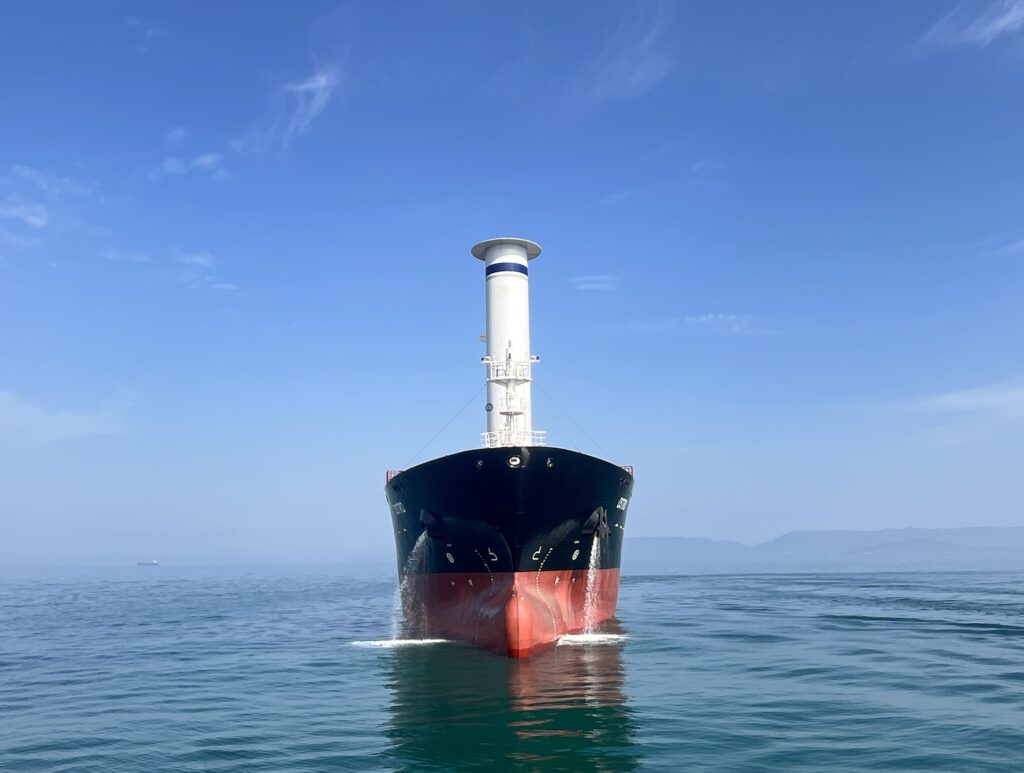
- integrating wind-assisted propulsion,
- monitoring fuel consumption and emissions in real time,
- optimizing vessel routing to reduce fuel consumption.
This ambition is fully aligned with the Company’s sustainable development strategy, which guides all our activities — from trading to logistics.
Embedded expertise serving trading activities
Shipping brings together a chain of specialized professions at the crossroads of maritime logistics, operational management and risk control.
Charterers, shipping operators, inspectors — each profile contributes targeted expertise to support trading teams and ensure smooth execution of operations at sea.
Talents committed to agile and responsible shipping
Here are some of the key roles that ensure the fluidity, safety and performance of our maritime transport operations: